

 Mains
Mains DIY
DIY







 HiFi Cables
 Power Supplies


 Computer Audio


 Vinyl Essentials





 HiFi Equipment


 Speakers
 Headphones

 Music
Music



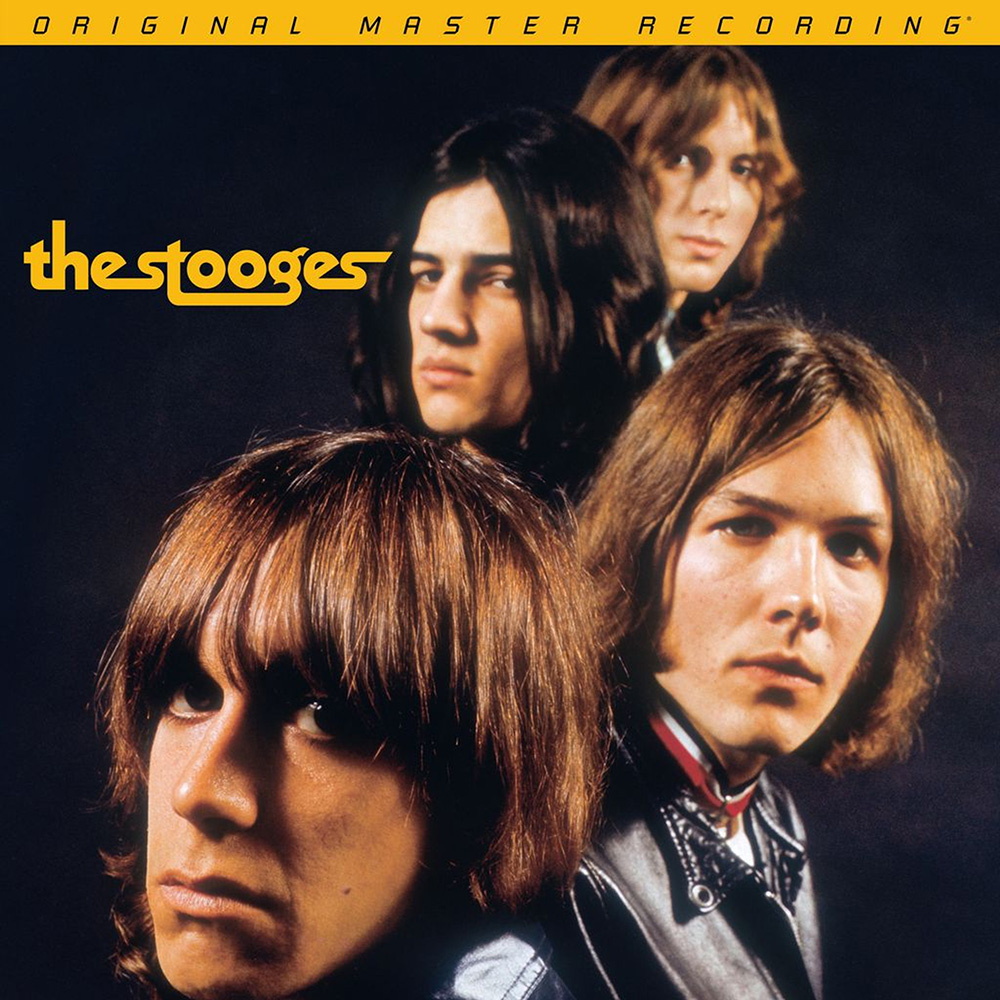

Always a Real Cool Time: The Stooges’ Primal Self-Titled Debut Changed Rock ‘n’ Roll and Anticipated Punk, Includes “I Wanna Be Your Dog” and “No Fun”
Experience the Groundbreaking 1969 Record in Definitive Sound and Celebrate Elektra 75: Mobile Fidelity’s Numbered-Edition 180g 45RPM 2LP Set Plays with Revealing Liveliness, Detail, and Physicality
1/4” / 15 IPS analog master to DSD 256 to analog console to lathe
Sourced from the original master tapes, pressed at Fidelity Record Pressing in California, housed in a Stoughton gatefold jacket, and reissued to celebrate Elektra 75, Mobile Fidelity’s numbered-edition 180g 45RPM 2LP set marks the first time Iggy Pop and Co.’s groundbreaking statement is available at 45RPM speed. This definitive-sounding copy benefits from the extra groove space by playing with enhanced definition, greater separation, and more realistic presence than prior versions.
The sonic characteristics that help make The Stooges unique — the welling fuzztones; the dark, wet smack of the low end; the cavernous reverb and wah-wah; the in-the-red overdrive; the vibrant handclaps; the nearly detached timbre of Pop’s vocal sneer; the grit, grime, and grind of the stacked rhythms — come across with involving clarity, liveliness, detail, and dimensionality. For all of their twisted density and savage tonality, songs project with a deep openness and large dynamic. It’s maybe as close as music has ever come to literally vibrating.
Indeed, everything Pop, bassist Dave Alexander, and brothers Ron and Scott Asheton create on The Stooges is utterly corporeal. The genesis of the band’s then-inimitable approach traces back to the Motor City’s industrial facilities; the urge to tear down the pretense of the hippie movement; the feeling of being an outsider amid a society reckoning with a collision of cultures; and the genuine desire to be completely original. With Pop as the only true musician in the quartet, the Stooges pursued a do-it-yourself ethic that had no precedent in their era.
Having constructed their own instruments from the likes of oil drums, vacuum cleaners, blenders, washboards, and various scraps, the Stooges eschewed structure and embraced experimentalism, improvisation, and personality. They used their lack of experience to their advantage, a trait manifested via the crude makeup and basic minimalism of nearly every note recorded for The Stooges.
Three tracks — “Real Cool Time,” “Not Right,” “Little Doll” — were essentially developed on the spot after the band, which seldom bothered with fixed arrangements and flew by the seat of its pants to see what would transpire onstage, realized it needed more material to fill out the album. That requirement also explains why the chanted mantra “We Will Fall” stretches beyond the 10-minute mark as it feeds into the fractured, psychedelic mood coursing throughout the effort.
As for the best-known cuts? The Stooges rehearsed and memorized them before entering the Hit Factory with their producer, Velvet Underground alumni John Cale. Echoing the recurrent sound of a metal press stamping out automotive panels, and drenched in dirty reverb, the opening “1969” balances the band’s street-walking aggression, dance-baiting attack, and dissatisfied ennui, the rhymed lyrics popping with truthful flair and Ron Asheton’s guitar functioning as a supercharged stun gun. A love ballad like none other, “Ann,” the first song Pop wrote for the ensemble, initially peers through a beaded curtain before its mysticism gives way to menace and distortion.
Nothing more aptly captures the Stooges’ essence than “I Wanna Be Your Dog,” a modern staple since covered by dozens of artists. Ranked the 314th Greatest Song of All Time by Rolling Stone, and based around a combination sleigh bells/one-note piano riff and rudimentary guitar chord sequence that maintains a non-varying pattern for nearly the entire duration, the steamrolling track hypnotizes by way of a groove that could extend for hours without growing tiresome. Its simple brilliance and scuzzy ooze are matched by the scuffed, scraping “No Fun,” an expressive pout almost nimble in build albeit edgy, dangerous, and explosive in practice. Just like Pop himself.
Decades on, every moment of The Stooges remains a real cool time.
Track Listing
Side One:
1969
I Wanna Be Your Dog
Side Two:
We Will Fall
Side Three:
No Fun
Real Cool Time
Side Four:
Ann
Not Right
Little Doll






















Reviews
There are no reviews yet.